
Sun Protection
Buildings with large glass surfaces are one of the hallmarks of modern architecture. Glass surfaces allow maximum use of natural light, so they naturally and harmoniously fit into the environment. Buildings with shiny glass facades are attractive in appearance, but they also have disadvantages, because problems arise inside the building due to solar energy and solar radiation.
Normally glazed surfaces without protection transmit 88% of solar energy, of which 80% penetrates directly into the interior of the building. Solar radiation, which has a certain wavelength, passes through the glass, and then the walls and room furniture absorb it and convert that energy into long heat waves. Such waves (heat) cannot pass through the glass and remain inside. It is this phenomenon that causes the "greenhouse effect", which causes heat to accumulate in the rooms and increase the temperature.
If the outside temperature does not fall below the temperature inside the building, the accumulated heat in the rooms remains and is not lost by ventilation or just air circulation. In addition to all of that, windows with double or triple glazing transmit internal heat to the outside even more slowly.
In buildings with 50% or more glazed surfaces, where the windows are glazed with only one pane of glass, in the case of closed windows and exposure to the sun, the temperature of the interior rooms reaches 10 to 15% higher than the outside temperature. For example, when the outside temperature is 25°C, the room temperature is 35°C or 40°C.
Significant energy savings by using screen fiberglass shades
The size of the glass surfaces on buildings is an important factor that affects the consumption of electrical energy. Cooling devices are necessary to maintain a comfortable temperature in the rooms, especially in the summer months. However, to achieve a comfortable temperature without cooling devices, it is necessary to use external shades, which can provide quality protection and are easy to maintain.
Research by CEBPT has shown that by using MERMET Sunscreen protective shades, the maximum temperature of rooms in different types of buildings can be reduced by 6°C. These studies lasted for three normal, sunny days in France. The difference between high and medium inertia (insulation) of the room was minimal.
In rooms where the temperature was maintained at 25°C using air conditioning, it was shown how much electrical energy can be saved by using MERMET sunscreen protective fabric:
- For a room with high inertia, when protective shades are installed on the outside of the glass surfaces, the cooling devices must have a maximum required power of 2000 W, while in a room without protective shades, the devices should have a power of 3800 W;
- For a room with medium inertia, the following values can be compared: 2000 W with, and 4100 W without protective shades.
In both examples, the installation of external protective shades reduced the consumption of electrical energy by 62% (15 kWh per day).
External shades are a necessity and an important factor in modern buildings. They contribute to the appearance of the building, as well as comfort and significant energy savings.
The large selection of MERMET protective shades offers perfect opportunities for protection from solar radiation and external adverse factors (rain, wind, hail, dust, insects...). In addition to protecting from heat, MERMET shades also have the property that they can be seen through, but also protect against curious views from the outside.
Sun Factor
- Energy of the sun's rays striking the window glass (100%)
- Reflection/reflected energy of sun's rays
- Absorbed energy in the glass that exits to the outside
- Energy of sun's rays that enters the interior
- Absorbed energy in the glass that enters the interior

The shading coefficient is the ratio of the sun factor in the case of protected glass (glass + shade) and the sun factor in the case of ordinary glass.
The Sun Protection Factor (IPS) is the percentage of solar radiation that the screen fiberglass shade reflects:
IPS = (1- Sc)
The values by which the effectiveness of the shade is determined must be given in precise measurements for a specific type of glass and only in the case of closed windows.
These values are also conditioned by other favorable and unfavorable factors.
In addition to the thickness and nature of the glass, the position and direction of the facade, the difference in external and internal temperature, as well as the distance between the shade and the window are important.
The following diagram is based on research by CEBTP – a, and shows the effectiveness of MERMET Sunscreen protective shades on windows with single and double glazing.

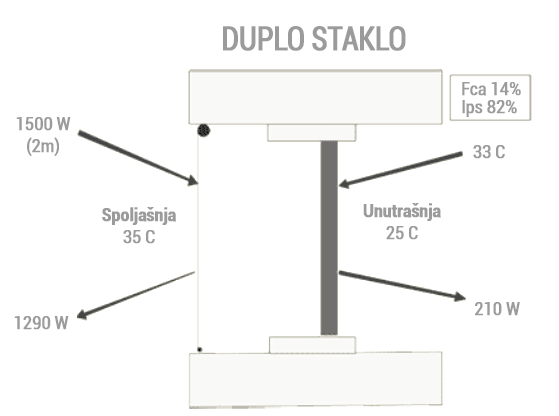
From graph 3, it can be seen that 82% of solar radiation is reflected (80% for windows with one pane of glass). Only 14% of the total solar energy and radiation penetrates through the windows into the interior of the room (18% in the case of a single pane of glass). When used on the inside, the sun factor is reduced by 64%.
| Catalog number |
Color | Ts | Rs | Ab | Tv | O-F | Sc-Inner screen | Sc-Outer screen | Sun factor | |||||
|---|---|---|---|---|---|---|---|---|---|---|---|---|---|---|
| 1/8" CL | 1/4" CL | 1/4" HA | 1/8" CL | 1/4" CL | 1/4" HA | Ordinary glass | Double glass | |||||||
| 0101 | Gray | 7 | 14 | 79 | 8 | 7 | 0.67 | 0.64 | 0.48 | 0.16 | 0.16 | 0.16 | 17 | 13 |
| 0202 | White | 22 | 63 | 15 | 16 | 6 | 0.37 | 0.37 | 0.34 | 0.25 | 0.24 | 0.22 | 24 | 22 |
| 0505 | Yellow | 19 | 59 | 22 | 12 | 6 | 0.39 | 0.39 | 0.35 | 0.22 | 0.22 | 0.20 | 19 | 16 |
| 0606 | Copper | 9 | 7 | 84 | 10 | 8 | 0.73 | 0.69 | 0.51 | 0.19 | 0.19 | 0.18 | 19 | 15 |
| 0707 | Silver | 12 | 36 | 52 | 11 | 8 | 0.54 | 0.52 | 0.41 | 0.18 | 0.18 | 0.17 | 20 | 17 |
| 0808 | Orange | 22 | 51 | 27 | 13 | 9 | 0.46 | 0.45 | 0.38 | 0.26 | 0.26 | 0.24 | 23 | 20 |
| 1010 | Dark Beige | 14 | 38 | 48 | 12 | 9 | 0.53 | 0.51 | 0.41 | 0.20 | 0.20 | 0.19 | 19 | 16 |
| 0102 | Gray | 9 | 35 | 56 | 9 | 6 | 0.54 | 0.52 | 0.41 | 0.16 | 0.16 | 0.15 | 16 | 13 |
| White | 9 | 25 | 66 | 9 | 6 | 0.60 | 0.58 | 0.45 | 0.17 | 0.17 | 0.16 | 17 | 14 | |
| 0103 | Gray | 7 | 25 | 68 | 7 | 7 | 0.60 | 0.57 | 0.44 | 0.15 | 0.15 | 0.14 | 16 | 13 |
| Blue | 7 | 20 | 73 | 7 | 7 | 0.63 | 0.60 | 0.44 | 0.16 | 0.16 | 0.15 | 17 | 13 | |
| 0105 | Gray | 8 | 33 | 59 | 8 | 6 | 0.55 | 0.53 | 0.42 | 0.15 | 0.15 | 0.14 | 16 | 13 |
| Yellow | 8 | 24 | 68 | 8 | 6 | 0.61 | 0.58 | 0.45 | 0.16 | 0.16 | 0.15 | 17 | 14 | |
| 0108 | Gray | 8 | 31 | 61 | 8 | 6 | 0.56 | 0.54 | 0.43 | 0.15 | 0.15 | 0.15 | 16 | 13 |
| Orange | 8 | 23 | 69 | 8 | 6 | 0.62 | 0.59 | 0.45 | 0.16 | 0.16 | 0.15 | 17 | 14 | |
| 0109 | Pink | 8 | 28 | 64 | 8 | 6 | 0.58 | 0.56 | 0.44 | 0.16 | 0.16 | 0.15 | 17 | 13 |
| Pink | 8 | 22 | 70 | 8 | 6 | 0.62 | 0.59 | 0.46 | 0.16 | 0.16 | 0.16 | 17 | 14 | |
| 2020 | Dirty White | 20 | 53 | 27 | 16 | 8 | 0.44 | 0.43 | 0.37 | 0.24 | 0.24 | 0.22 | 20 | 17 |
| 0207 | White | 13 | 45 | 42 | 10 | 6 | 0.48 | 0.46 | 0.39 | 0.18 | 0.18 | 0.17 | ||
| Silver | 13 | 52 | 35 | 10 | 6 | 0.43 | 0.42 | 0.36 | 0.18 | 0.17 | 0.16 | |||
| 3030 | Black | 5 | 5 | 90 | 6 | 4 | 0.73 | 0.69 | 0.51 | 0.16 | 0.15 | 0.15 | 16 | 12 |
| 0703 | Silver | 9 | 34 | 57 | 8 | 6 | 0.54 | 0.52 | 0.42 | 0.16 | 0.16 | 0.15 | ||
| Turquoise blue | 9 | 35 | 56 | 8 | 6 | 0.54 | 0.52 | 0.41 | 0.16 | 0.16 | 0.15 | |||
| 1002 | Dark Beige | 18 | 47 | 35 | 15 | 10 | 0.47 | 0.46 | 0.39 | 0.23 | 0.22 | 0.21 | 21 | 18 |
| White | 18 | 43 | 39 | 15 | 10 | 0.50 | 0.49 | 0.40 | 0.23 | 0.23 | 0.21 | 21 | 18 | |
| 1006 | Dark Beige | 7 | 21 | 72 | 7 | 5 | 0.63 | 0.60 | 0.46 | 0.16 | 0.15 | 0.15 | 19 | 15 |
| Copper | 7 | 28 | 65 | 7 | 5 | 0.58 | 0.56 | 0.43 | 0.15 | 0.15 | 0.14 | 18 | 14 | |
| 0110 | Gray | 8 | 27 | 65 | 9 | 7 | 0.59 | 0.56 | 0.44 | 0.16 | 0.16 | 0.15 | 16 | 13 |
| Dark Beige | 8 | 21 | 71 | 9 | 7 | 0.63 | 0.60 | 0.46 | 0.16 | 0.16 | 0.16 | 17 | 13 | |
| 0130 | Gray | 6 | 8 | 86 | 7 | 5 | 0.71 | 0.68 | 0.50 | 0.16 | 0.16 | 0.16 | ||
| Black | 6 | 11 | 83 | 7 | 5 | 0.69 | 0.66 | 0.49 | 0.16 | 0.16 | 0.15 | |||
| 0150 | Gray | 7 | 20 | 73 | 8 | 6 | 0.63 | 0.60 | 0.46 | 0.16 | 0.16 | 0.15 | 18 | 15 |
| Green | 7 | 17 | 76 | 8 | 6 | 0.65 | 0.62 | 0.47 | 0.16 | 0.16 | 0.15 | 19 | 15 | |
| 0740 | Silver | 11 | 31 | 58 | 10 | 8 | 0.57 | 0.55 | 0.43 | 0.18 | 0.18 | 0.17 | 20 | 16 |
| Blue | 11 | 27 | 62 | 10 | 8 | 0.60 | 0.57 | 0.44 | 0.19 | 0.18 | 0.18 | 20 | 16 | |
| 0750 | Silver | 9 | 31 | 60 | 8 | 6 | 0.56 | 0.54 | 0.43 | 0.16 | 0.16 | 0.15 | ||
| Green | 9 | 33 | 58 | 8 | 6 | 0.55 | 0.53 | 0.42 | 0.16 | 0.16 | 0.15 | |||
Ts: Solar transmittance
* Percentage of solar radiation transmitted through the material
Rs: Reflectance - reflection
* Percentage of solar radiation reflected by the material
Ab: Absorption
Amount of solar radiation absorbed by the material and retained within it
Tv: Visual transmittance
* Percentage of visible radiation transmitted by the material
Fs: Sun factor
* Percentage of solar radiation that penetrates into the room through the glass
Sc: Shading coefficient
* Ratio between the sun factor of a protected window (glass + shade) and the sun factor of an unprotected window
Sc = Fs (shade + glass) / Fs (glass)
1/8" CL: ordinary standard glass 3mm (1/8")
1/4" CL: standard glass 6mm (1/8")
1/4" HA: safety glass 6mm (1/4")